Table of Contents
Introduction
Struggling to keep up with rising cyberattacks that silently expose your business to risk? Cyber threats are growing faster than most organisations can handle, leading to unexpected data breaches, costly ransomware attacks, and hidden network vulnerabilities. Many businesses realise the danger only after damage is done, simply because they lack clarity about the Types of Ethical Hackers needed to protect their systems effectively.
Ethical hackers step in as a proactive defence force, identifying weaknesses before cybercriminals can exploit them. Understanding different ethical hacker roles in cybersecurity helps organisations build stronger security strategies, detect threats early, and minimise potential losses. This blog explores the key categories of white hat hackers, their responsibilities, and how specialised ethical hacking roles play a vital role in preventing modern cyber threats.
What You’ll Learn
- The types of Ethical Hackers and how they differ
- Key ethical hacker roles in cybersecurity and their real-world impact
- Various categories of white hat hackers are used in organisations
- Important ethical hacking specialisations to explore
- Essential ethical hacker job roles and responsibilities in threat prevention
Understanding the Types of Ethical Hackers
- The Types of Ethical Hackers refer to professionals who legally use hacking techniques to identify, analyse, and fix security vulnerabilities. Unlike malicious hackers, they work with organisations to improve system security rather than exploit it.
- Each type of ethical hacker focuses on a specific domain, such as networks, applications, or cloud environments. This division ensures that all areas of an organisation’s infrastructure are protected. By combining different expertise areas, ethical hackers create a strong, layered defence system.
Why Knowing the Types of Ethical Hackers Matters
Understanding the Types of Ethical Hackers is essential for both organisations and aspiring cybersecurity professionals.
For organisations, it helps to:
- Build a strong and proactive security framework.
- Identify vulnerabilities before they are exploited.
- Reduce financial losses and reputational damage.
- Improve compliance with cybersecurity regulations.
For learners, it provides clarity on ethical hacking specialisations and helps in choosing suitable ethical hacker roles in cybersecurity based on skills and interests.
Ethical Hacker Roles in Cybersecurity
The ethical hacker’s role in cybersecurity defines how professionals contribute to protecting systems and data. These roles are diverse and cover multiple layers of security operations.
The most common ethical hacker job roles and responsibilities include:
- Conducting penetration testing to simulate cyberattacks
- Identifying vulnerabilities in systems and applications
- Monitoring network activity for suspicious behaviour
- Performing security audits and compliance checks
- Recommending and implementing mitigation strategies
Each of these responsibilities aligns with different Types of Ethical Hackers, ensuring that organisations maintain strong security across all levels.
Categories of White Hat Hackers
The categories of white hat hackers represent how ethical hackers operate in real-world environments. These categories help organisations assign the right professionals to specific security tasks.
Penetration testers are one of the most well-known Types of Ethical Hackers. Their primary role is to simulate real-world cyberattacks in a controlled environment.
Key responsibilities:
- Testing applications, networks, and systems
- Identifying exploitable vulnerabilities
- Documenting and reporting security flaws
Their work is essential in strengthening ethical hacker roles in cybersecurity, as they provide practical insights into potential attack scenarios.
2. Security Analysts
Security analysts focus on monitoring and analysing system activity to detect threats early. They are a critical part of the categories of white hat hackers.
Core tasks include:
- Analysing logs and security alerts
- Detecting unusual patterns or suspicious behaviour
- Responding to potential security incidents
This role directly reflects important ethical hacker job roles and responsibilities related to threat monitoring and prevention.
3. Bug Bounty Hunters
Bug bounty hunters are independent ethical hackers who identify vulnerabilities and report them for rewards. They represent a flexible and growing segment within the Types of Ethical Hackers.
Benefits of this role:
- Hands-on real-world experience
- Continuous learning opportunities
- Contribution to global cybersecurity efforts
This category is closely linked to modern ethical hacking specialisations.
4. Network Security Engineers
Network security engineers are responsible for designing and maintaining secure network infrastructures. They play a major role in ethical hacker roles in cybersecurity.
Key responsibilities:
- Configuring firewalls and security tools
- Managing intrusion detection and prevention systems
- Securing network architecture
Their contribution ensures that organisations maintain strong protection at the network level.
Ethical Hacking specialisations
The field of ethical hacking offers multiple ethical hacking specialisations, allowing professionals to focus on specific domains.
Popular Ethical Hacking specialisations:
Some of the most in-demand ethical hacking specialisations include:
- Web application security
- Network security
- Cloud security
- Mobile application security
- IoT security
Each specialisation represents a unique area within the Types of Ethical Hackers, providing opportunities to build expertise in a focused domain.
Choosing the Right specialisation
Selecting the right ethical hacking specialisations depends on several factors:
- Personal interest in a specific technology area
- Current industry demand
- Technical skills and experience
- Long-term career goals
Choosing wisely helps individuals align with suitable ethical hacker roles in cybersecurity and achieve better career growth.
Ethical Hacker Job Roles and Responsibilities in Detail
Understanding ethical hacker job roles and responsibilities is crucial for anyone entering the cybersecurity field.
Core Responsibilities:
Typical responsibilities include:
- Conducting vulnerability assessments
- Performing risk analysis
- Executing security testing procedures
- Documenting findings and reports
- Continuously monitoring systems
These responsibilities vary depending on the Types of Ethical Hackers, but all contribute to maintaining strong security.
Skills Required for Ethical Hackers
To succeed in ethical hacker roles in cybersecurity, professionals must develop a strong skill set:
- Knowledge of networking fundamentals
- Understanding of operating systems
- Familiarity with cybersecurity tools and techniques
- Strong analytical and problem-solving abilities
- Awareness of emerging cyber threats
These skills support different categories of white hat hackers and enable effective threat prevention.
How Types of Ethical Hackers Help in Threat Prevention
The Types of Ethical Hackers play a critical role in preventing cyber threats through proactive measures. Instead of reacting after an attack, they identify and fix vulnerabilities beforehand.
Key Contributions:
- Detecting security weaknesses early
- Reducing the overall attack surface
- Strengthening system resilience
- Ensuring compliance with security standards
These contributions highlight the importance of ethical hacker roles in cybersecurity in modern organisations.
Real-World Example
Consider a company with an unsecured web application. A penetration tester identifies a vulnerability during testing and reports it to the organisation. The issue is fixed before attackers can exploit it, preventing data theft and financial loss. This example clearly shows how different Types of Ethical Hackers contribute to effective threat prevention.
Why Choose Systech Group for Ethical Hacking Training?
Systech Group is recognised as a leading ethical hacking training institute focused on practical, job-ready skills. The training approach is designed to give students real-time exposure and confidence to handle cybersecurity challenges effectively.
What makes Systech Group stand out:
- Hands-on training with real-time projects
- Industry-expert trainers with practical experience
- Updated curriculum aligned with current cyber threats
- Lab-based learning for better understanding
- Placement support and career guidance
- Focus on real-world application, not just theory
Systech Group helps learners build a strong foundation in ethical hacking and prepares them for a successful cybersecurity career.
Training and Career Opportunities in Ethical Hacking
To fully understand the Types of Ethical Hackers, proper training is essential. Structured learning helps individuals gain practical knowledge and hands-on experience.
What Training Includes:
A good training course covers:
- Networking and security fundamentals
- Ethical hacking tools and techniques
- Real-time simulations and practical scenarios
- Industry-relevant case studies
These topics directly relate to ethical hacker job roles and responsibilities.
Career Opportunities
After completing training, individuals can pursue roles such as:
- Penetration Tester
- Security Analyst
- Network Security Engineer
- Ethical Hacking Consultant
These roles fall under different categories of white hat hackers, offering diverse career paths.
Challenges Faced by Ethical Hackers
Despite their importance, the Types of Ethical Hackers face several challenges in their work.
Common Challenges
- Rapidly evolving cyber threats
- Complex and dynamic IT environments
- Time-sensitive security issues
- Maintaining legal and ethical compliance
These challenges make ethical hacker roles in cybersecurity demanding and require continuous learning.
Future Scope of Ethical Hacking
The demand for types of Ethical Hackers is increasing due to the growing number of cyber threats worldwide.
Growth Opportunities:
- Expansion of the cybersecurity industry
- High demand for skilled professionals
- Advancements in digital technologies
- Global career opportunities
This growth highlights the importance of ethical hacking specialisations and the increasing relevance of ethical hacker job roles and responsibilities.
Conclusion
The Types of Ethical Hackers are essential for protecting digital systems and preventing cyber threats. From penetration testers to security analysts, each role plays a unique part in strengthening security. Understanding ethical hacker roles in cybersecurity, categories of white hat hackers, and ethical hacking specialisations helps individuals and organisations build effective defence strategies.
As cyber threats continue to rise, the need for skilled ethical hackers will only increase. Building the right skills and choosing the right specialisation can lead to a successful and rewarding career in cybersecurity.
How Ethical Hackers Prevent Modern Cyber Threats
FAQs:
What are the Types of Ethical Hackers?
The Types of Ethical Hackers include penetration testers, security analysts, bug bounty hunters, and network security engineers who protect systems from threats.
What are the ethical hacker's roles in cybersecurity?
Ethical hacker roles in cybersecurity involve identifying vulnerabilities, testing systems, and preventing cyberattacks through proactive measures.
What are the categories of white hat hackers?
The categories of white hat hackers include professionals specialising in penetration testing, monitoring, and system security.
What are ethical hacking specialisations?
Ethical hacking specialisations include web security, network security, cloud security, and mobile application security.
What are ethical hacker job roles and responsibilities?
Ethical hacker job roles and responsibilities include vulnerability assessment, risk analysis, penetration testing, and reporting security issues.




Written by
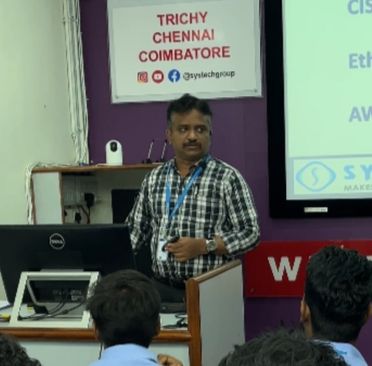
Leo Antony Raj
Senior Trainer · Networking, Cyber Security and Cloud
Leo Antony Raj has over 20 years of hands-on experience in hardware, networking, server configuration, ethical hacking and cloud computing. He has trained more than 10,000 students, and he teaches networking first, because every security and cloud role is built on it.