Table of Contents
Introduction
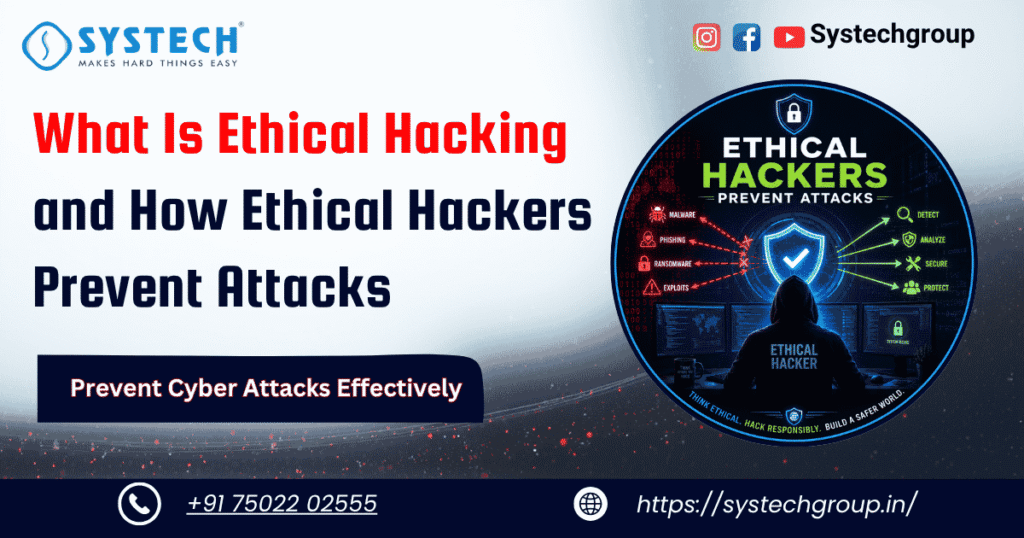
Cyber attacks can damage businesses, expose sensitive data, and disrupt networks within minutes. Have you ever wondered what ethical hacking is and why organisations depend on ethical hackers to secure their systems? Ethical hackers identify vulnerabilities before cybercriminals can misuse them, helping companies improve overall protection and reduce risks. This blog explains the role of ethical hackers, the methods they use, and how modern cybersecurity practices strengthen information security across networks and digital platforms.
What You’ll Learn
- Understanding what is ethical hacking in simple terms
- Important ethical hacking concepts used in cybersecurity
- Stages involved in the ethical hacking process
- Common ethical hacking techniques used by professionals
- Practical ethical hacking examples from industries
- Popular ethical hacking methods for vulnerability testing
- The importance of ethical hacking in modern businesses
- How ethical hackers improve information security
1. Understanding Ethical Hacking
Ethical hacking helps organisations identify security weaknesses before cybercriminals can exploit them. Ethical hackers use authorised testing methods to evaluate networks, applications, and systems without causing harm. This approach strengthens cybersecurity practices and supports better information security across digital environments.
What is ethical hacking? It is the authorised practice of testing systems, applications, and networks to identify weaknesses before attackers can exploit them. Ethical hackers work with permission to detect vulnerabilities and improve security measures.
Unlike malicious hackers, ethical professionals focus on strengthening defences rather than causing harm. Their work plays a major role in protecting business networks and maintaining strong information security standards.
Why Organisations Need Ethical Hackers
Businesses rely heavily on digital systems, making cybersecurity a top priority. The ethical hacking importance continues to grow because organisations need proactive protection against ransomware, phishing, and unauthorised access.
Ethical hackers help organisations by:
- Detecting vulnerabilities early
- Improving network protection
- Reducing cyber attack risks
- Strengthening information security practices
- Supporting compliance and security audits
Understanding ethical hacking concepts helps networking and cybersecurity professionals analyse vulnerabilities effectively.
Some key ethical hacking concepts include:
Identifying weak points in systems and applications.
Penetration Testing
Simulating controlled attacks to evaluate security strength.
Risk Evaluation
Measuring the impact of vulnerabilities on business operations.
Security Auditing
Reviewing policies, configurations, and access controls.
These ethical hacking concepts form the foundation of modern cybersecurity strategies.
3. Stages in the Ethical Hacking Process
The ethical hacking process follows a structured approach to evaluate security systems safely and efficiently.
Reconnaissance
The first stage of the ethical hacking process involves gathering information about the target system, including domains, IP addresses, and network structures.
Scanning
Ethical hackers use specialised tools to identify vulnerabilities, open ports, and weak configurations.
Exploitation
Ethical hackers use specialised tools to identify vulnerabilities, open ports, and weak configurations.
Exploitation
In this stage, vulnerabilities are tested carefully to understand their impact.
Reporting
The final ethical hacking process stage focuses on documenting findings and recommending security improvements.
A well planned ethical hacking process helps organisations improve defence mechanisms and maintain stronger protection.
4. Common Ethical Hacking Techniques
Professionals use several ethical hacking techniques to identify weaknesses and evaluate network security.
Password Testing
Testing password strength helps identify weak credentials that attackers could exploit.
SQL Injection Testing
This technique checks whether databases are vulnerable to malicious queries.
Phishing Simulations
Ethical hackers conduct awareness tests to evaluate how employees respond to suspicious communication.
Wireless Security Testing
WiFi security assessments help identify encryption and access vulnerabilities. These ethical hacking techniques help organisations strengthen their cybersecurity posture effectively.
Modern ethical hacking methods combine technical analysis with real-world attack simulations.
Malware Analysis
Security professionals analyse malicious software behaviour to improve detection capabilities.
Reverse Engineering
This approach helps experts understand how applications and malicious code function internally.
Fuzz Testing
Random data inputs are used to identify application crashes and hidden vulnerabilities. These ethical hacking methods help improve overall system resilience and reduce security risks.
6. Real World Ethical Hacking Examples
Practical ethical hacking examples show how proactive testing prevents costly cyber incidents.
Banking Application Testing
Ethical hackers identify vulnerabilities in financial applications before attackers can misuse them.
Cloud Security Assessment
Businesses use ethical hacking examples to evaluate cloud storage and access controls.
IoT Device Protection
Connected devices are tested regularly to prevent unauthorised access and misuse. These ethical hacking examples highlight the value of proactive cybersecurity practices.
7. Ethical Hacking Importance in Cybersecurity
The importance of ethical hacking continues to increase as businesses depend more on cloud services, remote access, and digital communication.
Major benefits include:
- Early vulnerability detection
- Better system protection
- Reduced downtime and financial losses
- Improved customer trust
- Stronger information security frameworks
Understanding ethical hacking importance helps organisations prepare for evolving cyber threats.
8. Career Opportunities in Ethical Hacking
Learning what ethical hacking creates opportunities in cybersecurity and networking careers.
Popular roles include:
- Ethical Hacker
- Penetration Tester
- Security Analyst
- Cybersecurity Consultant
- Network Security Engineer
Professionals skilled in ethical hacking concepts and ethical hacking techniques are highly valued across industries.
Build Practical Ethical Hacking Skills with Systech Group
For individuals interested in cybersecurity and network protection, professional training helps build practical knowledge in vulnerability assessment, penetration testing, and attack prevention. Systech Group provides hands-on ethical hacking training designed to help learners understand real-world cybersecurity challenges through practical implementation and guided lab sessions.
At Systech Group, learners gain exposure to real-time attack simulations, penetration testing environments, and industry-focused security practices. The training covers important areas such as ethical hacking concepts, network security testing, vulnerability assessment, and information security fundamentals, with practical learning support from experienced trainers.
The training includes:
- Ethical hacking process and penetration testing
- Network vulnerability assessment
- Web application security testing
- Wireless network security practices
- Ethical hacking techniques using professional tools
- Real-world ethical hacking examples and lab scenarios
- Information security best practices
- Career-focused cybersecurity skill development
Hands-on exposure to live lab environments and security tools helps learners improve technical confidence and prepare for professional roles in cybersecurity and ethical hacking.
Conclusion
What is ethical hacking? It is a proactive cybersecurity practice that helps organisations identify vulnerabilities, improve defence systems, and strengthen information security before attacks occur. By understanding the ethical hacking process, applying effective ethical hacking methods, and learning from real ethical hacking examples, businesses can reduce risks and secure their digital infrastructure more effectively.
Strengthen Security Against Online Attacks
FAQs:
What is ethical hacking in simple words?
What is ethical hacking is legally breaking into systems with permission to find weaknesses. It strengthens information security using ethical hacking concepts and processes, preventing real attacks.
What are the main ethical hacking techniques?
Key ethical hacking techniques include scanning, injection attacks, and social engineering. These ethical hacking methods simulate threats, helping networks build robust information security.
Why is the ethical hacking process important?
The ethical hacking process follows phases like reconnaissance and exploitation to uncover vulnerabilities. Its ethical hacking importance lies in proactive defence for information security.
Can you share ethical hacking examples from India?
Ethical hacking examples include Systech Group stopping bank breaches via SQL testing. These showcase ethical hacking techniques, saving millions in information security costs.
How does ethical hacking prevent cyber attacks?
Ethical hackers use methods like vulnerability scanning in the ethical hacking process to patch flaws. This upholds the importance of ethical hacking in networking and information security.




Written by
Leo Antony Raj
Senior Trainer · Networking, Cyber Security and Cloud
Leo Antony Raj has over 20 years of hands-on experience in hardware, networking, server configuration, ethical hacking and cloud computing. He has trained more than 10,000 students, and he teaches networking first, because every security and cloud role is built on it.