By Leo Antony Raj, Senior Trainer, Systech Group 20+ years in networking and cybersecurity · Updated October 2026.
6 Min read
In short
To get a government cybersecurity job in India, earn a B.E./B.Tech or MCA in Computer Science, IT or Cyber Security, build skills in networking, Linux, VAPT and incident response, and apply through official notifications from NIC, NIELIT, CERT-In, DRDO, ISRO, BARC, defence organisations and PSUs. Many routes use exams such as GATE or agency-specific tests, followed by an interview and background verification.
Table of Contents
How to Get a Government Job in Cybersecurity
In today’s digital age, cybersecurity has become a cornerstone of national security. As cyber threats continue to evolve, governments around the world are ramping up their efforts to protect sensitive information and critical infrastructure. If you’re interested in pursuing a career in this dynamic field, you might be asking yourself: how to get a government job in cybersecurity? This comprehensive guide will walk you through the essential steps to secure a position in this vital sector.
Quick Roadmap: From Student to Government Cybersecurity Job
The simplest path looks like this: 12th → B.E./B.Tech (CSE/IT/Cyber Security) or BCA → MCA/M.Tech (optional) → networking, Linux and Python skills → projects and certifications → internship → GATE or recruitment exams → interview and verification.
- Build fundamentals: networking, operating systems and programming during your degree.
- Specialise: learn VAPT, SIEM, digital forensics and incident response.
- Prove your skills: complete lab projects and one or two relevant certifications.
- Prepare for exams: start GATE or agency-specific preparation in your pre-final or final year.
- Apply and follow notifications: apply only through official recruitment portals.
If you have already graduated, you can follow the same steps, starting from step 2.
Understanding Cybersecurity Roles in Government
Common Positions Available
The landscape of cybersecurity jobs within the government is diverse, offering various roles that cater to different skill sets and interests. Here are some prominent positions:
- Cybersecurity Analyst: These professionals monitor networks for security breaches and investigate incidents.
- Information Security Officer: Responsible for developing and implementing security policies and procedures.
- Ethical Hacker: Also known as penetration testers, they simulate attacks to identify vulnerabilities.
- Incident Response Specialist: Focuses on responding to and managing security incidents.
- Cybercrime Investigator: Works with law enforcement to investigate cybercrimes.
| Organisation | What it Typically Hires For | Usual Entry Route |
|---|---|---|
| NIC | IT, network and information security roles for central government systems | NIC/NIELIT recruitment notifications |
| NIELIT | Technical, scientific and training roles in cybersecurity | Direct recruitment notifications |
| CERT-In (MeitY) | Incident response and threat analysis | Periodic ministry notifications, often contract or deputation |
| DRDO | Technical and research roles in defence systems | DRDO CEPTAM and DRDO recruitment notifications |
| ISRO and BARC | Network security and information assurance in scientific establishments | Scientist/Engineer and technical post notifications |
| Intelligence Bureau | Technical and cyber intelligence roles | IB ACIO (Technical) notifications |
| Defence Services | Cyber and signals-related roles | Service-specific entry schemes |
| PSUs and Public Sector Banks | IT security officers and SOC roles | GATE-based hiring and IT Officer recruitment |
| State Departments and Police Cyber Cells | Cybercrime investigation and state IT security | State recruitment notifications |
Skills Required for Cybersecurity Jobs
To excel in these roles, candidates need a mix of technical and soft skills.
Technical Skills:
- Proficiency in programming languages (e.g., Python, Java).
- Knowledge of network security protocols.
- Familiarity with cybersecurity tools (e.g., firewalls, intrusion detection systems).
- Ethical hacking and vulnerability assessment (VAPT), digital forensics and incident response.
- Basic cloud security knowledge.
Soft Skills:
- Strong analytical thinking.
- Excellent communication abilities.
- Problem-solving mindset.
Educational Requirements
Degrees Needed
Most government positions require at least a bachelor’s degree in fields such as Computer Science, Information Technology, or Cybersecurity. Some roles may even necessitate advanced degrees for higher-level positions.
Eligibility and Age Limit
| Your Stage | What to Do | Typical Entry |
|---|---|---|
| After 12th | Join a B.E./B.Tech or B.Sc/BCA in CS, IT or Cyber Security | Degree first, then apply |
| Diploma holder | Consider lateral entry to B.E./B.Tech, or apply for technical posts that accept diplomas | Technical assistant and support posts |
| B.E./B.Tech/BCA graduate | Build skills, projects and certifications; prepare for GATE | PSUs, DRDO, NIC, ISRO and other agencies |
| MCA/M.Tech | Target specialist, scientist and research posts | Scientist and officer-level posts |
| Working professional | Use your experience to apply for lateral, contract or deputation roles | CERT-In, NIC and PSU openings |
Most central government technical posts set a maximum age of roughly 27 to 35 years, with relaxations for reserved categories, ex-servicemen and persons with disabilities as per government rules. Age limit, qualification and experience always follow the specific notification, so check it before you apply.
Certifications That Enhance Employability
Certifications can significantly boost your employability in the cybersecurity field. Here are some highly regarded options:
| Certification | Description |
|---|---|
| CISSP (Certified Information Systems Security Professional) | Recognized globally for information security expertise. |
| CompTIA Security+ | Entry-level certification covering foundational security concepts. |
| CEH (Certified Ethical Hacker) | Validates skills in ethical hacking techniques. |
| CISM (Certified Information Security Manager) | Focuses on managing and governing information security programs. |
Alternative Education Paths
If traditional education isn’t feasible, consider alternative paths like boot camps or online courses. Many reputable platforms offer specialized training in cybersecurity that can help you gain practical skills quickly.
Can you get in without a degree? Dedicated cybersecurity officer and scientist roles generally require a relevant degree. Some technical or support posts may accept a diploma or equivalent, as per the notification. Practical skills, projects and certifications help you move up later, and you can complete a degree through part-time or distance options
Gaining Experience
Internships and Entry-Level Positions
Internships provide invaluable experience and often lead to full-time positions. Look for opportunities within government agencies or private companies that work closely with the government.
Networking Opportunities
Building connections is crucial in this field. Attend industry conferences, workshops, or local meetups to meet professionals who can provide guidance or job leads.
Volunteer Work or Projects
Engaging in volunteer work or personal projects can help you build your portfolio. Consider contributing to open-source cybersecurity projects or participating in Capture The Flag (CTF) competitions.
- A network intrusion detection lab
- A SIEM and log-monitoring setup
- A vulnerability assessment report
- Python security automation scripts
- A digital forensics investigation lab
Navigating the Application Process
Government Cybersecurity Exams in India
| Exam or Route | Conducted For | What It Opens |
|---|---|---|
| GATE (CS/IT) | National-level test | PSU roles, sponsored M.Tech programmes and some agency shortlisting |
| DRDO CEPTAM | DRDO | Technical and research support posts |
| NIC/NIELIT Recruitment Tests | NIC | Scientist and technical assistant roles |
| IB ACIO (Technical) | Intelligence Bureau | Technical intelligence and cyber roles |
| CERT-In Notifications | MeitY | Incident response and analyst roles |
| ISRO and BARC Recruitment | ISRO and BARC | Scientist, engineer and technical officer posts |
Note: Exam names, patterns and dates can change every recruitment cycle, so always confirm the latest details in the official notification.
Finding Job Openings
Government job openings can be found on various platforms, including:
- Official recruitment pages of NIC, NIELIT, CERT-In, DRDO, ISRO and BARC
- The National Career Service portal and Employment News
- State government websites
- LinkedIn job boards
Understanding Security Clearance Requirements
Many government positions require security clearance due to the sensitive nature of the work. The process involves background checks and may take several months, so it’s essential to be prepared.
Crafting a Strong Resume and Cover Letter
Your resume should highlight relevant experience and skills tailored to the specific job you’re applying for. Use action verbs and quantify achievements whenever possible. Match your details to the notification and keep them consistent with your documents.
Selection Process, Step by Step
- Read the notification for eligibility, age limit and vacancies.
- Apply online and upload the required documents.
- Appear for the written test, or get shortlisted by GATE score.
- Attend a skill test or technical interview.
- Complete document and medical verification.
- Clear background and police verification.
- Receive your appointment order.
Preparing for Interviews
Common Interview Questions for Cybersecurity Roles
Be ready to answer both technical and behavioral questions during interviews. Here are some examples:
Technical Questions:
- What steps would you take to secure a network?
- Can you explain how a firewall works?
- What does the IT Act or CERT-In guidance say about reporting an incident?
Behavioral Questions:
- Describe a time you faced a significant challenge in your work.
- How do you stay updated on current cybersecurity threats?
Demonstrating Knowledge of Current Cyber Threats
Staying informed about recent cyber threats shows your commitment to the field. Regularly read cybersecurity blogs, CERT-In advisories, follow industry leaders on social media, and participate in forums.
Career Advancement in Government Cybersecurity
Opportunities for Growth
Government roles often provide clear pathways for advancement. You can move from entry-level positions into management roles such as Security Architect or Cyber Intelligence Analyst with experience and continued education.
Salary in Government Cybersecurity Jobs in India
| Level | Approx. Monthly Pay (Including Allowances) | Notes |
|---|---|---|
| Technical Assistant and Support Posts | ₹35,000 to ₹65,000 | Diploma or graduate-level entry |
| Scientist and Officer-Level Posts | ₹80,000 to ₹1,20,000+ | Degree or M.Tech, usually through an exam |
| Senior and Specialist Roles | Higher, based on pay level | Needs experience and promotions |
Pay follows the 7th Pay Commission structure and varies by post, city and allowances. Contract roles at agencies like CERT-In may follow different pay rules.
Continuing Education and Certifications
As technology evolves, so must your skills. Pursuing further certifications or advanced degrees can keep you competitive in this fast-paced field.
Final Thoughts
Getting a government cybersecurity job in India comes down to three things: the right degree, hands-on skills, and following the right recruitment notifications. Most candidates lose time by applying without checking eligibility or by relying on certifications alone. Once you understand the role you want and the route that leads to it, the path becomes much clearer.
- Education: B.E./B.Tech or MCA in Computer Science, IT or Cyber Security. M.Tech helps for scientist and research posts.
- Skills: networking, Linux, Python, VAPT, SIEM, digital forensics and incident response.
- Routes: GATE for PSUs, plus recruitment from NIC, NIELIT, CERT-In, DRDO, ISRO, BARC and IB.
- Proof of ability: lab projects and one or two relevant certifications, such as CEH, Security+, CISA or OSCP.
- Always: check the official notification for age limit, qualification and dates.
Start preparing early, build a small project portfolio, and keep an eye on official portals every month. If you want structured, lab-based training to build these skills, compare at least three institutes in your city and ask for the syllabus and lab access in writing before you join. That one step affects your preparation quality more than anything else in this guide.
Frequently asked questions
What Are the Most Important Skills for a Cybersecurity Job in the Government Sector?
To thrive in government cybersecurity roles, professionals must possess a mix of technical and soft skills. Here are some of the most important competencies:
- Network Security: Understanding firewalls, intrusion detection systems (IDS), and secure network configurations is essential for protecting sensitive data.
- Risk Management: The ability to identify, assess, and mitigate risks is critical. Cybersecurity professionals must implement strategies to manage vulnerabilities effectively.
- Incident Response: Skills in managing security incidents, including detecting, analysis, and recovery from breaches, are vital to minimize damage.
- Programming Proficiency: Familiarity with languages like Python and Java helps in automating tasks and analyzing vulnerabilities.
- Cloud Security Knowledge: As more government services migrate to cloud platforms, expertise in securing cloud environments is increasingly important.
- Problem-Solving: The ability to think critically and develop solutions under pressure is essential for tackling complex cyber threats.
- Communication: Cybersecurity professionals often need to explain technical concepts to non-technical stakeholders. Clear communication is key.
- Attention to Detail: A meticulous approach helps in identifying vulnerabilities that could be overlooked.
How Can I Tailor My Resume to Stand Out for a Government Cybersecurity Position?
Match your resume to the notification. List your degree, certifications and projects first, and use the exact skill terms from the job description, such as VAPT, SIEM and incident response. Quantify results, such as vulnerabilities fixed or incidents handled. Keep it to one or two pages, and make sure every detail matches the documents you will submit for verification.
What Are the Common Challenges Faced by New Cybersecurity Professionals in Government Roles?
New entrants often face long recruitment cycles, competitive exams with limited vacancies, strict background verification, and legacy systems with formal approval processes. Strong fundamentals, consistent exam preparation and hands-on lab practice help you handle these challenges.
How Does the Job Market for Cybersecurity in Government Compare to the Private Sector?
Government roles generally offer job stability, structured pay and defined promotion paths. Private companies usually offer higher starting pay, faster growth and wider technology exposure. Government hiring happens through notifications and exams, so vacancies are fewer and timelines longer, while private hiring is continuous.
What Are the Key Responsibilities of a Cybersecurity Analyst in a Government Agency?
A government cybersecurity analyst monitors networks and systems for threats, analyses alerts and logs, investigates and reports incidents, runs vulnerability assessments, applies security policies and patches, and prepares reports for senior officials. In India, they also follow guidelines such as CERT-In requirements and the IT Act.
Which Government Exams Can Lead to a Cybersecurity Job in India?
The main routes are GATE (CS/IT) for PSUs and some agencies, DRDO CEPTAM, NIC/NIELIT recruitment tests, IB ACIO (Technical), and notifications from CERT-In, ISRO and BARC. Exams and dates change each cycle, so confirm them on the official notification.
What Qualification Is Needed for a Government Cybersecurity Job in India?
Most roles require a B.E./B.Tech or equivalent in Computer Science, IT, Electronics or Cyber Security, or an MCA. Scientist and research posts often prefer an M.Tech. Always follow the qualification listed in the specific notification.
Is There an Age Limit for Government Cybersecurity Jobs?
Yes. Most central government technical posts set a maximum age of roughly 27 to 35 years, with relaxations for reserved categories, ex-servicemen and persons with disabilities. The exact limit is given in each notification.
What Is the Salary of a Cybersecurity Job in the Indian Government?
Entry-level technical posts typically start around ₹35,000 to ₹65,000 per month, while scientist and officer-level posts can range from about ₹80,000 to ₹1,20,000 or more including allowances. Pay depends on the post, pay level and city.
Can Freshers Get a Government Cybersecurity Job, and Is a Degree Compulsory?
Yes, freshers can apply whenever a notification allows. Entry usually comes through exams like GATE or direct recruitment. Dedicated cybersecurity officer and scientist roles generally need a relevant degree, while some technical or support posts accept a diploma as per the notification.
Which Certification Is Best for a Government Cybersecurity Job?
No single certification is mandatory. CEH and Security+ suit beginners, CISA suits audit roles, OSCP suits penetration testing, and CISSP or CISM suit senior roles. Choose based on the role and check whether the notification lists a preferred one.
Written by
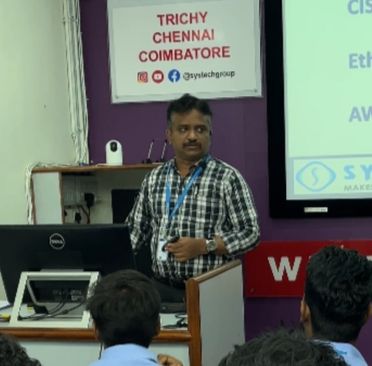
Leo Antony Raj
Senior Trainer · Networking, Cyber Security and Cloud
Leo Antony Raj has over 20 years of hands-on experience in hardware, networking, server configuration, ethical hacking and cloud computing. He has trained more than 10,000 students, and he teaches networking first, because every security and cloud role is built on it.