By Leo Antony Raj, Senior Trainer, Systech Group 20+ years in Network Security and Cloud Architecture | Updated October 2026.
6 min read
In short
The best cybersecurity courses after a BSc are CompTIA Security+ for a strong foundation, SOC analyst training for a first job, CEH for ethical hacking, a PG Diploma in Cybersecurity for complete job-oriented training, and an MSc in Cybersecurity if you want a degree. CISSP comes later, after about five years of work experience.
Table of Contents
Introduction
Finished your BSc and wondering how to step into a high-growth IT career? Cybersecurity is one of the most in-demand fields today, offering exciting job roles, strong salary potential, and rapid career advancement for graduates with the right skills. Choosing the right [Cybersecurity courses after a BSc] can open doors to roles like ethical hacker, security analyst, and network security engineer.
In this blog, you’ll discover the best course options, valuable certifications, and the smartest path to build a successful Cybersecurity career after graduation.
What You’ll Learn
- BSc graduates already have a strong base for starting a Cybersecurity career.
- Choose courses like CEH, CompTIA Security+, CISSP, or PG Diploma based on your goals.
- Cybersecurity offers high-demand jobs with strong salary growth.
- Hands-on training and the right institute improve job opportunities.
Can you start cybersecurity after completing a BSc?
- One of the most common questions graduates ask is: Can I do Cybersecurity after a BSc Computer Science? The answer is yes, and in many cases, BSc graduates are already well-positioned to begin.
- Students from BSc Computer Science, Information Technology, Electronics, Mathematics, and related backgrounds already possess valuable technical knowledge. Concepts like programming basics, networking, databases, and operating systems give you a foundation that makes Cybersecurity learning much easier compared to someone starting without technical exposure.
- What employers need beyond your degree, however, is proof that you can apply that knowledge in real-world security situations. That is where a specialised Cybersecurity course for BSc graduates becomes essential. These courses transform your academic base into practical skills that companies are willing to hire for.
Why BSc Graduates Are Highly Suitable for Cybersecurity Careers
BSc graduates are often preferred in entry-level Cybersecurity hiring because they bring both technical understanding and adaptability. The transition into Cybersecurity becomes smoother because much of the foundational learning is already familiar.
Some major advantages BSc graduates have include:
- Strong understanding of computer systems and network fundamentals
- Exposure to programming logic and debugging concepts
- Analytical thinking developed during technical coursework
- Faster ability to learn Cybersecurity frameworks and tools
- Better readiness for certification-based training
Because of this, building a career in Cybersecurity after BSc graduation is not only possible but highly practical for motivated learners.
Eligibility for Cybersecurity Courses After BSc
You do not need a BSc in Computer Science to start. Most cybersecurity certifications do not ask for a specific degree, while degree courses such as an MSc ask for a minimum percentage in your BSc. Here is what each route usually needs.
Which BSc streams can start?
Certified Ethical Hacker (CEH)
- CEH is one of the most recognised certifications in the Cybersecurity industry and is highly valued by employers worldwide. It is designed for learners interested in offensive security, where the focus is on identifying weaknesses before malicious hackers exploit them.
- This course covers topics such as ethical hacking techniques, penetration testing, vulnerability scanning, reconnaissance, and attack simulation methods.
CEH is ideal if your goal is to become:
- Ethical Hacker
- Penetration Tester
- Vulnerability Assessor
- Security Analyst
For students interested in ethical hacking roles, CEH remains one of the best Cybersecurity courses after BSc.
CompTIA Security+
CompTIA Security+ is widely recommended for fresh graduates entering Cybersecurity for the first time because it creates a strong foundation across all major security domains.
It focuses on:
- Threat detection and prevention
- Risk management principles
- Network security concepts
- Cryptography basics
- Identity and access control
If you are new to the field and want a beginner-friendly Cybersecurity course for BSc graduates, this is one of the safest and smartest starting points.
CISSP for Advanced Career Growth
- For graduates planning long-term career advancement into leadership roles, CISSP is one of the most respected advanced certifications in the world.
- Although full CISSP certification requires work experience, students can begin preparing early and qualify as associates while building experience.
This path is excellent for future roles such as:
- Security Consultant
- Security Manager
- Information Security Officer
- Risk Governance Specialist
Among the best Cybersecurity courses after a BSc, CISSP stands out for long-term executive career growth.
Free and Beginner-Friendly Ways to Start
If you are not ready to pay for a course yet, start free. Cisco Networking Academy offers a self-paced Junior Cybersecurity Analyst path of about 120 hours. It prepares you for the Cisco Certified Support Technician (CCST) Cybersecurity certification and for entry-level roles such as cybersecurity technician and junior analyst.
Two other certificates learners add later: the IBM Cybersecurity Analyst certificate on Coursera, a beginner-to-intermediate programme covering incident response and security controls, and GIAC Security Essentials (GSEC), an intermediate certification for people with some hands-on security experience.
Free courses teach concepts well. What they cannot give you is mentor feedback, live lab practice and mock interviews. That is where instructor-led training helps.
PG Diploma in Cybersecurity
A diploma-based BSc Cybersecurity course offers broader academic and practical exposure compared to short-term certifications. These programmes usually last between six months and one year and are ideal for graduates who prefer structured learning.
Typical modules include:
- Digital forensics
- Cloud security
- Incident response
- Security operations centre training
- Malware analysis basics
This option is particularly suitable for learners who want complete job-oriented preparation before entering the workforce.
MSc and M.Tech in Cybersecurity After BSc
An MSc in Cybersecurity is a two-year postgraduate degree. It goes deeper into digital forensics, cryptography, network security and cyber law. It suits students who want a university qualification, plan to study further, or aim for academic and some government roles.
An M.Tech in Cybersecurity is also a two-year degree, but most colleges ask for a BE/BTech and a GATE score. That is why many BSc graduates choose an MSc or MCA instead. If you studied BCA instead of a BSc, [the options are a little different].
MSc or certification? An MSc gives you a degree and strong theory. Certifications and lab-based training are faster and build the tool skills that SOC and penetration testing interviews check. Many students do both: they study the MSc and add Security+, CEH or SOC analyst training along the way.
Cybersecurity Courses After BSc at a Glance
MSc and M.Tech in Cybersecurity After BSc
If you are wondering which Cybersecurity course is best after BSc, the answer depends entirely on your career direction.
- Choose CEH if you want ethical hacking roles.
- Choose CompTIA Security+ if you need strong beginner fundamentals.
- Choose CISSP if you aim for future leadership roles.
- Choose a PG Diploma if you want complete practical job-ready training.
- Choose an MSc in Cybersecurity if you want a university degree.
- Choose SOC analyst training if your goal is a first monitoring job.
The best course is not the most expensive one. It is the one aligned with your career goals and learning level.
Career Opportunities After Cybersecurity Training
A well-chosen Cybersecurity course opens access to several rewarding job paths. The industry offers diverse opportunities depending on your specialisation.
Security Analyst
Security Analysts monitor systems for suspicious activity, investigate alerts, and protect organisational infrastructure.
Typical starting salary: ₹4–7 LPA
SOC Analyst
SOC Analysts work in security operations centres, responding to live incidents and monitoring threats in real time.
Typical starting salary: ₹3.5–6 LPA
Penetration Tester
Penetration Testers simulate attacks to identify system weaknesses before hackers exploit them.
Typical starting salary: ₹6–12 LPA
Cloud Security Engineer
Cloud Security Engineers secure cloud platforms like AWS, Azure, and Google Cloud.
Typical starting salary: ₹8–18 LPA
Digital Forensics Analyst
These professionals investigate cybercrime incidents and recover digital evidence after attacks.
Typical starting salary: ₹5–10 LPA
Best Institute for Cybersecurity After BSc: Why Systech Group Stands Out
Finding the best institute for Cybersecurity after a BSc is just as important as choosing the right course. As a trusted Cybersecurity Training Institute, Systech Group has built a strong reputation for preparing aspiring professionals for successful careers in Cybersecurity. Their training is specially designed for BSc graduates, helping students strengthen their technical foundation with practical, industry-focused skills.
What Makes Systech Group the Best Institute for Cybersecurity After BSc
- Industry-aligned curriculum covering CEH, CompTIA, and advanced SOC operations
- Hands-on labs with real-world attack and defence scenarios
- Placement assistance connecting graduates with valuable career opportunities
- Flexible batch timings suited for fresh graduates and working professionals
- Certified trainers with active experience in penetration testing and VAPT
- Recognised as a preferred choice for Cybersecurity courses for BSc graduates
Whether you are a recent graduate planning your Cybersecurity career after a BSc or a professional upgrading your expertise, Systech Group provides structured learning paths to help you achieve your career goals with confidence.
How Cybersecurity Training for BSc Students Usually Works
Modern Cybersecurity training is designed to combine theoretical knowledge with practical execution. Employers today prefer candidates who can apply tools in real environments rather than simply explain concepts.
Typical training includes:
- Vulnerability scanning practice
- Penetration testing labs
- Firewall and SIEM exposure
- Incident response simulations
- Threat intelligence exercises
This hands-on format helps graduates adapt faster to workplace demands.
How to Choose the Right Course for Your Career
Choose in three steps. First, decide the role you want. Second, check your eligibility and the time you have. Third, match the course to the role.

Conclusion
Cybersecurity is one of the strongest career choices available for BSc graduates today, but success depends on making informed decisions early. The right Cybersecurity courses after a BSc can transform your degree into a specialised professional advantage that employers actively seek. If you have been asking, ” Can I do Cybersecurity after BSc Computer Science, the answer is clearly yes. With the right certification, structured training, and practical exposure, you can build a rewarding and future-proof Cybersecurity career.
Your BSc gives you the academic foundation. The right Cybersecurity training gives you the professional edge.
Frequently asked questions
Which Cybersecurity courses are best for freshers after a BSc?
Beginner-friendly certifications like CompTIA Security+ and CEH are excellent starting points for freshers. These courses help build core security knowledge before advancing into specialised areas.
Can I do Cybersecurity after a BSc Computer Science without extra programming knowledge?
Yes, absolutely. A BSc Computer Science background gives you a solid technical base, and most Cybersecurity courses include any additional scripting skills required.
What is the average salary after starting a Cybersecurity career with a BSc?
Entry-level Cybersecurity professionals can earn between ₹4 LPA and ₹8 LPA, depending on skills, certifications, and job role. Higher specialised roles offer greater salary growth.
How long does Cybersecurity training usually take after a BSc?
Course duration varies by learning path. Certification-based courses may take around 3 months, while advanced diploma training can extend up to 12 months.
Is certification from a Cybersecurity Training Institute valuable for jobs?
Yes, certifications from a reputed Cybersecurity Training Institute are highly valued when combined with practical skills, hands-on lab training, and recognised industry credentials.
Can I do cybersecurity after BSc Maths, Physics or Chemistry?
Yes. Most cybersecurity certifications and diploma courses do not ask for a Computer Science degree. If you studied Maths, Physics or another science subject, spend two to three months on networking, Linux and basic scripting first. Then join a course such as CompTIA Security+, SOC analyst training or ethical hacking. MSc eligibility depends on the university.
Is an MSc in Cybersecurity better than a certification after BSc?
It depends on your goal. An MSc gives a two-year degree and theory, which helps for research, teaching and some government or academic roles. Certifications and lab-based training are faster, from a few weeks to about a year, and build the tool skills that SOC and penetration testing jobs check in interviews. Many students combine both.
Which should I do first after BSc, CEH or Security+?
Security+ is the better first step for most BSc freshers because it covers the basics: threats, networks, cryptography, identity and risk. Do CEH when you want an ethical hacking or penetration testing career. EC-Council asks for official CEH training or two years of security experience, so freshers usually join an approved training programme.
Are there free cybersecurity courses for BSc graduates?
Yes. Cisco Networking Academy offers a free, self-paced Junior Cybersecurity Analyst path of about 120 hours. It prepares you for the Cisco CCST Cybersecurity certification. Free courses are good for testing your interest. Instructor-led labs, mentor feedback and interview practice usually come from a paid training programme.
Which cybersecurity course with placement assistance is best after BSc?
Pick the course that matches your target role and offers hands-on labs, a trainer with real industry experience, and structured placement support such as resume review and mock interviews. Be careful with 100 percent job guarantee claims, because no genuine institute can guarantee a job. Systech Group offers placement assistance with its cybersecurity training.
Can I get a government job in cybersecurity after BSc?
Yes, but eligibility depends on each notification. Many government cybersecurity roles ask for a specific degree, such as BE/BTech, MCA or MSc, or for certifications, and are filled through recruitment exams or contracts. An MSc plus certifications such as CEH or Security+ widens your options. Read [how government cybersecurity roles are filled] for details.
Can I do CISSP right after BSc?
Not the full CISSP. ISC2 asks for about five years of paid security experience. After a BSc you can still pass the exam and become an Associate of ISC2, then earn the full certification as you gain experience. Start with Security+ or SOC analyst training first.
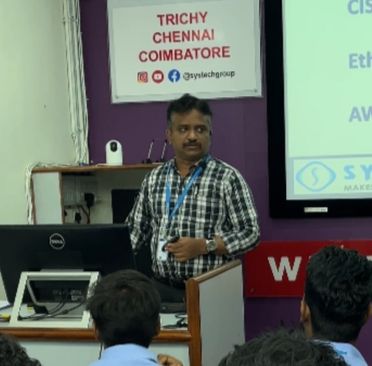
Written by
Leo Antony Raj
Senior Trainer · Networking, Cyber Security and Cloud
Leo Antony Raj has over 20 years of hands-on experience in hardware, networking, server configuration, ethical hacking and cloud computing. He has trained more than 10,000 students, and he teaches networking first, because every security and cloud role is built on it.