Table of Contents
Introduction
In today’s hyper-connected world, advanced ethical hacking methods have become the backbone of proactive cybersecurity. Even seasoned professionals face evolving threats where traditional tools and defences fall short. With increasing zero-day exploits, cloud vulnerabilities, and social engineering sophistication, ethical hackers must keep upgrading their skill sets. Mastering advanced ethical hacking methods not only strengthens defence but also ensures business continuity, data protection, and compliance. Organisations now seek experts who can go beyond surface-level testing and predict real-world attacks before they happen.
What You’ll Learn
- Understanding real-world applications of advanced ethical hacking methods
- Learning powerful penetration testing techniques for enterprise systems
- Enhancing network vulnerability assessment and reporting accuracy
- Strengthening web application security testing capabilities
- Exploring practical tools from the ethical hacking tools list
- Tips for continuous skill development and security testing automation
Understanding the Foundation of Ethical Hacking
Ethical hacking is no longer limited to finding basic vulnerabilities. It involves simulating sophisticated cyberattacks using structured and legal methods to uncover weaknesses before malicious hackers exploit them. To stay competitive, security professionals must apply systematic approaches focusing on real-world threat models.
- Attack surfaces are increasing due to remote work and IoT expansion.
- Businesses demand security teams capable of adversary-level thinking.
- Ethical hackers are now integral to compliance and incident response planning.
- Continuous learning ensures resilience against evolving attack patterns.
Network Packet Manipulation
Network packet manipulation remains one of the crucial ethical hacking methods for analysing and securing communication channels. By intercepting, altering, or analysing data packets, security experts evaluate network behaviour under compromised conditions.
Example: Using Wireshark or Scapy to inject or replay packets during controlled penetration testing techniques.
Key Tools: Scapy, Ettercap, Wireshark
Best Practice: Always capture live network traffic during simulated attacks to correlate vulnerabilities with actual data flow.
Advanced Social Engineering Attacks
Social engineering isn’t just phishing—it includes deep psychological tactics that manipulate targets into revealing confidential information.
Techniques Used
- Spear phishing with personalised context
- Voice phishing (vishing) targeting call centres
- Deepfake-based impersonation attacks
Ethical hackers use these practical attack scenarios to evaluate awareness and reinforce organisational security culture.
Exploitation through Privilege Escalation
Privilege escalation helps assess how attackers move laterally within systems. It ensures that once a vulnerability is exploited, there are controls preventing unauthorised privilege gain.
Scenario Example
- Testing local privilege escalation in Linux using misconfigured sudo permissions.
- Related Concepts: Access control models, kernel exploitation, and defensive patch management.
- Outcome: Reduced risk of privilege abuse through preventive configuration.
Cloud Infrastructure Penetration Testing
As organisations migrate to cloud environments, advanced penetration testing techniques have become essential for maintaining cloud resilience.
Focus Areas
- Misconfigured storage buckets like S3 or Azure Blob
- IAM mismanagement and credential exposure
- API gateway and serverless function attacks
Commonly Used Tools
- Burp Suite, Prowler, CloudSploit and ScoutSuite are preferred for scanning and configuration verification.
- Regular testing ensures secure cloud deployment and compliance maintenance.
Network Vulnerability Assessment Using AI Tools
Network vulnerability assessment plays a core role in detecting critical risks automatically. Artificial intelligence enhances visibility and ranks vulnerability severity based on exploitation probability.
Top Practices
- Automate scans with Nessus or OpenVAS
- Use AI for anomaly-based behaviour detection
- Map vulnerabilities to patch release timelines
Integrating AI with traditional scanning provides faster insights for remediation and system hardening.
Web Application Security Testing
Modern enterprises rely heavily on web applications that handle sensitive data and transactions. Regular web application security testing prevents unauthorised access and data breaches.
Common Testing Approaches
- SQL injection and cross-site scripting (XSS) testing
- Authentication bypass and session hijack checks
- API endpoint and file upload vulnerability reviews
Continuous testing within the deployment pipeline ensures uninterrupted protection and uptime.
Wireless Network Attacks and Defence
Wireless networks continue to present security gaps that attackers exploit. Ethical hackers must identify and resolve encryption weaknesses through targeted simulations.
Testing Techniques
- WPA/WPA2 cracking simulations to test encryption strength
- Rogue AP creation and rogue detection testing
- Bluetooth and IoT device vulnerability validation
Tools Used
- Aircrack-ng, Reaver, Kismet, and Wireshark are standard for auditing wireless security layers.
- These tests secure WLAN networks and reduce unauthorised data interception.
Reverse Engineering Malware
Reverse engineering allows ethical hackers to understand malicious code deeply, aiding in defence improvement and threat detection.
Methodology
- Disassembling binaries via Ghidra or IDA Pro
- Monitoring behaviour inside sandbox environments
- Identifying payloads and persistence methods
Reverse engineering malware enhances proactive defence and improves response to cyber intrusions.
Ethical Hacking Tools List for Advanced Professionals
Security experts rely on consistent tools to manage testing operations. A well-curated list of ethical hacking tools ensures accuracy across assessments.
Recommended Tools Overview
- Metasploit: For structured exploit simulations
- Nmap: For network reconnaissance
- Burp Suite: For comprehensive web application testing
- OWASP ZAP: Free penetration testing alternative
- Hydra: For password brute-force analysis
Using diverse tools improves speed, effectiveness, and data correlation during assessments.
Cyber Threat Intelligence Integration
Integrating cyber threat intelligence (CTI) strengthens defensive measures through predictive analysis. It helps identify likely attack vectors and emerging vulnerabilities.
Integration Benefits
- Early awareness of new exploits
- Smoother vulnerability prioritisation
- Strengthened incident detection cycles
Example
Mapping real-time MITRE ATT&CK patterns into ethical hacking reports bridges red and blue team efforts. This holistic integration improves response capability and threat anticipation.
Professional Ethical Hacking Training and Upskilling
For experienced professionals in networking and IT, structured learning provides a pathway toward mastering advanced ethical hacking methods. Institutes like Systech Group offer industry-validated training designed to enhance security careers.
- Practical exposure through penetration testing techniques
- Mastery of network vulnerability assessment labs
- Hands-on practice in web application security testing
- Guidance for efficient use of the ethical hacking tools list
- Training aligned with live projects ensures technical depth and recognisable credentials.
Conclusion
Advanced ethical hacking methods empower cybersecurity professionals to foresee threats, simulate real-world scenarios, and secure modern digital systems effectively. From deep network testing and social engineering simulations to malware analysis and AI-based vulnerability detection, these practices shape resilient security ecosystems. Professionals who embrace continuous learning remain the strongest line of defence in today’s digital economy.
FAQs:
What are advanced ethical hacking methods?
They are comprehensive strategies used to simulate realistic cyberattacks, identifying vulnerabilities across systems and applications before actual exploitation.
How does network vulnerability assessment differ from penetration testing?
Network vulnerability assessment identifies security flaws, while penetration testing techniques simulate attacks to validate exploitability.
Why is web application security testing essential?
It ensures transactional and customer data remain protected while maintaining compliance and operational stability.
Which tools are part of the ethical hacking tools list?
Metasploit, Nmap, Burp Suite, Wireshark, and Aircrack-ng are widely used for both enterprise and academic security research.
Who should learn advanced ethical hacking methods?
IT and network professionals, cybersecurity specialists, and students aiming for security analyst roles benefit from mastering these methods.




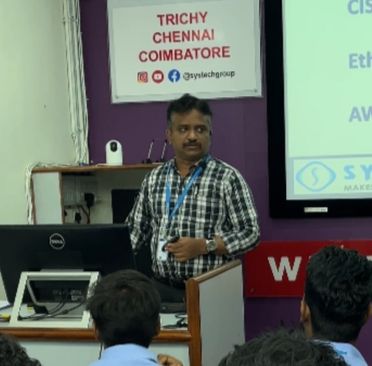
Written by
Leo Antony Raj
Senior Trainer · Networking, Cyber Security and Cloud
Leo Antony Raj has over 20 years of hands-on experience in hardware, networking, server configuration, ethical hacking and cloud computing. He has trained more than 10,000 students, and he teaches networking first, because every security and cloud role is built on it.