Table of Contents
Introduction
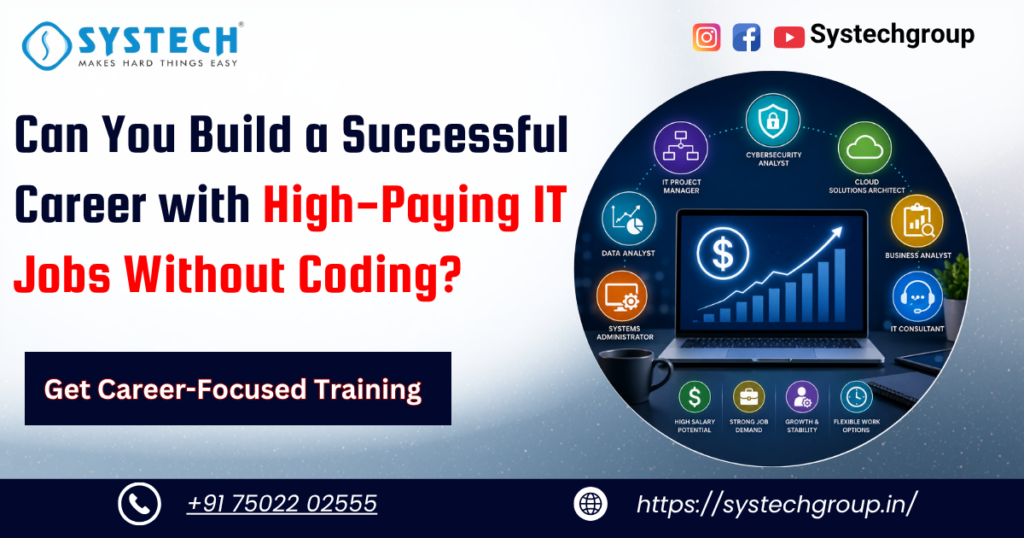
Do you think a successful IT career always requires coding skills? The reality is that many professionals build rewarding careers in IT without coding, in areas such as networking, cloud computing, cybersecurity, and system administration. With the right non-coding courses and practical experience, you can qualify for high-paying IT jobs without Coding and achieve long-term career growth in the technology industry.
What You’ll Learn
- Popular IT roles that do not require programming
- The best non-coding courses for career growth
- How to build a strong portfolio for non-technical IT roles
- Salary expectations and career opportunities
- Steps to secure IT jobs without coding
Why Consider IT Jobs Without Coding?
Not everyone enjoys coding, debugging, or software development. Fortunately, businesses require professionals with expertise in networking, cloud administration, cybersecurity, systems management, and project coordination.
Many non-coding IT jobs focus on maintaining, securing, and optimising technology infrastructure. These positions are essential for business operations and often offer competitive salaries.
Demand and Future Growth
Several trends continue to increase demand for professionals in IT jobs without coding:
- Rapid cloud adoption across industries
- Growing cybersecurity concerns
- Increased reliance on digital infrastructure
- Expansion of remote and hybrid work environments
Professionals who complete relevant non-coding courses and gain hands-on experience often enjoy strong career progression and long-term job security.
High-Paying Roles That Do Not Require Programming
High-paying roles without programming include digital marketing, product management, sales strategy, and UI/UX design, where business and creative skills matter more than coding. These careers reward communication, analysis, and problem-solving abilities, offering strong income growth with experience.
Network Engineer and Network Administrator
Network professionals design, configure, and maintain communication systems within organisations.
Responsibilities include:
- Managing routers and switches
- Configuring wireless networks
- Troubleshooting connectivity issues
- Monitoring network performance
Certifications such as CCNA and CompTIA Network+ are highly respected and help candidates qualify for IT jobs without coding in networking.
Cloud Administrator and Cloud Operations Specialist
Cloud computing has created numerous opportunities for professionals who prefer infrastructure management over software development.
Responsibilities include:
- Managing cloud resources
- Configuring storage and networking
- Monitoring cloud performance
- Managing user access controls
Cloud certifications can open doors to tech jobs without coding across multiple industries.
Cybersecurity Analyst
Cybersecurity professionals help organisations detect threats, manage risks, and respond to security incidents.
Common responsibilities include:
- Monitoring security tools
- Performing vulnerability assessments
- Investigating incidents
- Supporting compliance initiatives
Certifications such as Security+ and CEH are valuable non-coding courses for aspiring cybersecurity professionals.
Systems Administrator
Systems administrators manage servers, operating systems, user accounts, and organisational IT resources.
Typical tasks include:
- User management
- Server maintenance
- Backup administration
- Access control management
This role remains one of the most popular non-coding IT jobs for individuals interested in infrastructure management.
IT Project Manager
Project managers focus on planning, coordination, budgeting, and communication rather than technical development.
Key responsibilities include:
- Managing project timelines
- Coordinating teams
- Tracking deliverables
- Managing stakeholder expectations
Certifications such as PMP, Scrum Master, and ITIL can help professionals move into high paying it jobs without coding.
Which Non-Coding Courses Should You Choose?
Choosing the right training path depends on your interests and career goals. The following non-coding courses are widely recognised by employers.
Networking
Recommended certifications:
- CCNA
- CompTIA Network+
- Cisco Networking Labs
- Juniper Networking Training
Cloud Computing
Popular certifications:
- AWS Cloud Practitioner
- Microsoft Azure Fundamentals
- Google Cloud Associate Certifications
Cybersecurity
Recommended learning paths:
- CompTIA Security+
- Certified Ethical Hacker (CEH)
- SOC Analyst Training
Systems Administration
Useful training options:
- Windows Server Administration
- VMware Virtualization
- Hyper-V Management
- Active Directory Administration
Project Management
Valuable certifications include:
- PMP
- Scrum Master
- ITIL Foundation
Completing these non-coding courses helps candidates develop practical skills that employers actively seek.
How to Build a Strong Portfolio
A portfolio demonstrates your ability to apply technical concepts in real-world situations.
Build Practical Projects
Consider creating:
- Network architecture diagrams
- Cloud infrastructure setups
- Security assessment reports
- Virtual machine environments
- Server administration projects
Gain Hands-On Experience
Employers value practical exposure. You can:
- Create a home lab.
- Use cloud free-tier services.
- Participate in virtual labs.
- Volunteer for small IT projects.
A strong portfolio can significantly improve your chances of securing IT jobs without coding.
Resume and LinkedIn Tips
To stand out from other candidates:
- Use a role-specific headline.
- Highlight measurable achievements.
- Showcase certifications clearly.
- Include project documentation.
- Add portfolio links when possible.
Career Paths and Salary Growth
Many professionals begin with entry-level support positions and gradually advance into specialised roles.
Entry-Level Positions
Examples include:
- IT Support Technician
- Helpdesk Executive
- Junior Systems Administrator
Mid-Level Positions
After gaining experience and certifications, professionals often move into:
- Network Engineer
- Security Analyst
- Cloud Administrator
These roles typically offer significant salary increases.
Senior-Level Positions
Experienced professionals can progress into:
- Infrastructure Manager
- Cloud Operations Lead
- Cybersecurity Manager
- IT Manager
These are among the most sought-after high paying it jobs without coding available in today’s technology sector.
Real-World Career Example
A student completed CCNA and AWS Fundamentals training before building a small networking lab at home. After gaining practical experience, they secured a Network Administrator position and later transitioned into cloud operations.
By adding cybersecurity certifications and expanding their skill set, they eventually moved into one of the many high paying it jobs without coding available in the cloud industry.
This example demonstrates how certifications, projects, and hands-on learning can create excellent opportunities without programming expertise.
Selecting the Best IT Training Institute for Your Career
When selecting a training institute, evaluate:
- Industry-relevant curriculum
- Practical lab access
- Certification support
- Placement assistance
- Interview preparation
Systech Group is one of the well-known IT training institutes in Tamil Nadu, offering courses in networking, cloud computing, cybersecurity, Linux, and system administration. With 23+ years of experience, Systech focuses on practical learning through hands-on labs, real-time projects, certification support, and placement assistance. Students looking to build a career in IT can gain the skills and industry exposure needed to improve their job opportunities.
How to Transition from Student to Professional
Follow these steps:
- Choose a specialisation such as networking, cloud, security, or systems administration.
- Complete relevant non-coding courses and certifications.
- Build three to five practical projects.
- Create a professional portfolio.
- Apply for internships and entry-level positions.
- Continue learning through advanced certifications.
Consistent learning and hands-on experience can help you move into rewarding technology careers without programming.
Conclusion
The technology industry offers multiple career paths beyond software development. Success depends more on your skills, certifications, and practical experience than on your ability to write code. Whether you choose networking, cloud computing, cybersecurity, or IT management, focusing on one area and gaining hands-on experience can help you build a rewarding career. Start with a clear goal, invest in continuous learning, and take advantage of opportunities that align with your strengths and interests.
Prepare for Non-Coding IT Career Growth
FAQs:
Can I get high-paying IT jobs without coding after graduation?
Yes. Many employers hire candidates with certifications, project experience, and practical skills, even if they have limited programming knowledge.
Which non-coding courses are best for cybersecurity careers?
CompTIA Security+, CEH, and SOC Analyst training are among the most valuable non-coding courses for cybersecurity professionals.
Do cloud careers require coding?
Many cloud administration roles focus on infrastructure management, storage, networking, and security rather than software development.
Are networking careers still in demand?
Yes. Organisations continue to require skilled networking professionals, making it one of the most reliable career paths for those pursuing IT jobs without coding.
How can I improve my chances of getting hired?
Build practical projects, earn certifications, complete relevant non-coding courses, and create a professional portfolio that demonstrates real-world skills.